When choosing a staircase for your property, one of the most common questions is whether steel, concrete, or timber is the better option. For most residential and commercial projects, metal staircases in Kitengela offer the best combination of strength, design flexibility, efficient use of space, and long-term durability. They’re easier to customise, quicker to install than cast concrete staircases, and can be paired with materials such as timber, glass, or tile to create a staircase that enhances your home’s appearance.
This guide walks through the main types of metal staircases, how the materials compare, what actually drives the price up or down, and what to expect when you get one fabricated locally.
Why Metal Staircases Make Sense in Kitengela
A large part of Kitengela sits on expansive, black cotton soil, the kind that swells when wet and shrinks when dry. That movement is hard on rigid concrete structures over time; hairline cracks show up first, necessitating the need for full repairs, which are very expensive. A steel staircase, on the other hand, when properly anchored, handles that ground movement far better, because a steel frame flexes slightly instead of cracking the way concrete does.
Then there’s the dry-season dust and heat along the Nairobi–Namanga corridor. Timber staircases start showing their limits here too, expanding, contracting, and eventually attracting termites over a few dry-to-wet cycles. Steel, especially when properly primed and powder-coated, holds up to both problems far longer.
Space is the other consideration. Kitengela’s newer developments, gated compounds, maisonettes, apartment blocks, are often built on smaller plots than older Nairobi suburbs. Metal staircases, particularly spiral and floating designs, take up noticeably less floor area than a poured concrete staircase, and that matters when every square metre of a plot counts.
Staircase vs. Railing: A Quick Clarification
Before going further, it’s worth separating two things people often lump together. The staircase itself is the structural element, the stringers, treads, and landings that let you move between floors. The railing or handrail is the safety barrier running alongside it. This article focuses on the staircase structure itself. If you’re researching railings and handrails specifically, we’ve written a separate, detailed guide on that, this one covers what holds the whole thing up.
Types of Metal Staircases
Straight Staircases
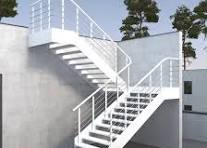
The most common and most affordable option: a single run of steps between two floors, usually against a wall. Straightforward to fabricate and install, and structurally simple. The main downside is that it needs a fairly long, uninterrupted stretch of floor space, which isn’t always available on compact plots.
Spiral Staircase
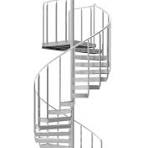
Spiral designs wind around a central steel pole and are one of the most space-efficient options available. They are ideal for smaller homes, rooftop access, or as a secondary staircase in a commercial building. The trade-off is comfort: spiral stairs are narrower and steeper, so they’re less practical for daily heavy traffic, moving furniture, or households with young children or elderly residents.
Floating (Cantilevered) Staircases
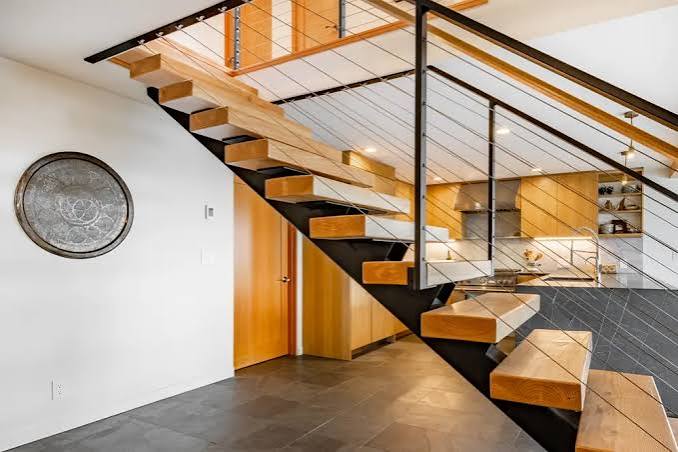
These metal staircases have treads that appear to “float,” anchored into a wall or a single central stringer with no visible support underneath. They’re a popular choice for modern, minimalist homes since they open up a room visually instead of blocking it.
They also require more precise engineering , the load path has to be calculated properly, since there’s no continuous support structure , so this isn’t a design to have built by an inexperienced fabricator.
L-Shaped and U-Shaped Staircases
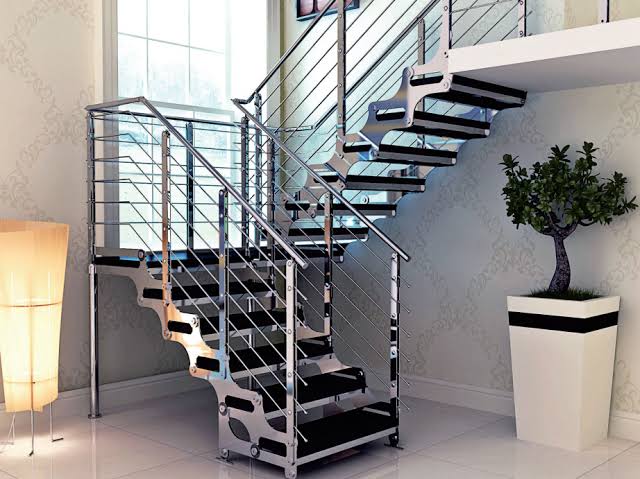
These change direction partway up, with a landing at the turn. They’re a practical middle ground: more compact than a straight run in some layouts, generally easier to navigate than a spiral, and the landing can double as a useful pause point in taller storeys.
This is a common choice in two- and three-storey maisonettes around Kitengela.
Material Comparison: Mild Steel vs. Stainless Steel vs. Galvanized Steel
The material you choose affects durability, appearance, and price more than almost any other decision in this project.
| Material | Durability | Maintenance | Appearance | Relative Cost |
|---|---|---|---|---|
| Mild steel | Strong, but rusts if not properly coated | Needs periodic repainting or powder coating | Versatile — takes paint and powder coat well | Lowest |
| Stainless steel | Naturally corrosion-resistant | Occasional cleaning or polishing | Sleek, modern finish | Highest |
| Galvanized steel | Good rust resistance from the zinc coating | Low — coating lasts years before touch-up | Utilitarian, less refined finish | Mid-range |
For most residential staircases in Kitengela, mild steel with proper priming and powder coating is the practical choice because it is cost-effective, and it holds up well for years when done correctly. Stainless steel earns its higher price mainly where the staircase is highly visible or exposed to more moisture. Galvanized steel tends to show up more in commercial and industrial settings, where long-term corrosion resistance matters more than finish quality.
Pairing Steel With Other Materials
Very few metal staircases are pure steel from top to bottom. The stringers and structural frame are almost always steel, but the treads — and sometimes the balustrade infill — are often a different material:
- Steel + timber treads — a warm, familiar look on top of a strong steel frame, common where homeowners want a wood aesthetic without a fully timber structure.
- Steel + concrete or screed treads — durable and low-maintenance, usually finished with tiles.
- Steel + glass — used more on landings and balustrades than treads themselves, for a modern, open feel.
How a Metal Staircase Can Transform Your Home
A staircase is no longer just a functional way to move between floors. In many modern homes, it has become one of the first architectural features people notice. The right metal staircase can serve as a striking focal point, adding character and value to your property while complementing both contemporary and traditional designs.
1️⃣
Creates a Modern, Premium Look
Clean lines, slim steel profiles, and open designs give metal staircases a sophisticated appearance that concrete staircases often cannot achieve. Whether finished in matte black, powder-coated white, or paired with timber and glass, a steel staircase instantly gives a home a more refined, architectural feel.
2️⃣
Makes Your Home Feel Larger
Unlike bulky concrete staircases, metal staircases have a lighter visual footprint. Open-riser and floating designs allow natural light to pass through, making rooms feel brighter, more spacious, and less enclosed. This is particularly valuable in Kitengela’s modern maisonettes and homes built on compact plots where maximizing space is a priority.
3️⃣
Complements a Wide Range of Interior Styles
One of steel’s greatest advantages is its versatility. A metal staircase can be customized to suit almost any design style:
- ✅ Industrial interiors with exposed steel and minimalist finishes.
- ✅ Contemporary homes with glass balustrades and floating treads.
- ✅ Warm, modern spaces by combining steel frames with natural timber treads.
- ✅ Traditional homes with decorative railings and powder-coated finishes.
This flexibility allows homeowners to create a staircase that blends seamlessly with the rest of the property’s architecture.
4️⃣
Adds Long-Term Property Value
A professionally fabricated steel staircase is more than a structural feature, it’s an investment in your home’s appeal. Modern staircase designs are highly sought after because they create an upscale impression, improve functionality, and require relatively little maintenance. A well-designed staircase can significantly enhance a property’s overall presentation, making it more attractive to future buyers or tenants.
5️⃣
Designed to Match Your Vision
Unlike prefabricated concrete staircases, steel staircases are custom fabricated to fit the available space and your preferred design. Whether you want a grand entrance staircase, a compact spiral staircase for rooftop access, or a minimalist floating staircase for a modern home, steel provides the flexibility to create a design that is both practical and visually impressive
Safety and Handrail Basics
Every staircase needs a compliant handrail. Handrails should sit at a comfortable grip height (around 900mm above the tread), run continuously along any open side, and have baluster spacing tight enough that a small child can’t slip through. We cover materials and design options for handrails in much more depth in our dedicated guide, worth reading once you’ve settled on your staircase structure.
What Does a Metal Staircase Cost in Kitengela?
Pricing depends on several moving parts, so treat any figure here as a starting point rather than a quote:
- Staircase type — straight designs are generally the most affordable; floating and spiral designs cost more because of the engineering and fabrication precision involved.
- Material — mild steel with powder coating sits at the lower end; stainless steel adds a noticeable premium.
- Tread finish — timber or tiled treads add cost over bare steel or mesh treads.
- Height and number of steps — more steps means more material and labour.
- Site access and installation complexity — a straightforward ground-floor install costs less than fitting a staircase into a tight, already-built space.
As a rough guide, mild steel staircases with basic finishing tend to start in the lower hundreds of thousands of shillings for a standard residential run, climbing from there with stainless steel, custom design work, or premium tread finishes. The only reliable way to know your actual number is a site visit and a written quote, dimensions, soil conditions, and design details all move the price.
Maintenance and Lifespan
A well-fabricated steel staircase, properly primed and powder-coated, should last decades with minimal upkeep:
- Touch up any chips or scratches in the coating promptly — exposed bare steel is where rust starts.
- Rinse dust and grit off outdoor staircases periodically; Kitengela’s dry-season dust is abrasive on protective coatings over time.
- Re-coat every few years depending on exposure — a fully indoor staircase will go far longer between touch-ups than an exterior one.
You can read our full article of metal fabrication maintenance.
Frequently Asked Question
Is a metal staircase cheaper than a concrete one?
Generally, yes for multi-storey installs. Steel staircases use less material overall and install faster, which usually offsets steel’s higher per-kilogram cost compared to concrete.
How long does a steel staircase take to fabricate and install?
A standard residential straight staircase typically takes one to two weeks from final design approval to installation, depending on complexity and workshop schedule. Spiral and floating designs can take longer due to the precision fabrication involved.
Can the tread finish in metal staircases be changed later?
Yes. The steel frame is usually the permanent structural element, and finishes like timber, tile, or steel mesh treads can often be replaced or upgraded later without rebuilding the whole staircase.
Do metal staircases rust in Kitengela’s climate?
Mild steel will rust if the protective coating is damaged and not repaired. With proper priming, powder coating, and occasional maintenance, this isn’t an issue in practice. Stainless steel avoids the concern almost entirely, at a higher upfront cost.
Working With a Local Fabricator
Because so much of a staircase’s long-term performance comes down to correct anchoring and load calculation for the specific site, it’s worth working with a fabricator who actually visits the property rather than quoting off a phone description alone. At Beyond Metalworks, every project starts with a site consultation, precisely because Kitengela’s soil and layout variations mean no two staircases should really be designed off the same template.